
Do you want to stay compliant with German return policy rules during peak season? In this post, we will show you how to do it!
Peak season is when German return rules stop being a policy page and start being a queue. Black Friday, Christmas, and the January send-back wave hit the same shop at once. Customers still get a 14-day withdrawal right.
You still owe a clear notice, a usable withdrawal path, and a refund on a tight clock. Miss the wording or bury the button, and that 14-day window can stretch far longer.
This guide covers what German distance-selling rules require, where shops slip under load, and how a Shopify withdrawal button keeps requests visible when volume spikes.
Table of Contents
What German Return Rules Actually Require
German return rules for online shops are not a courtesy window you write in your FAQ. For a B2C distance sale, the customer has a 14-day right of withdrawal (Widerrufsrecht). They do not need a reason. The clock usually starts the day after they receive the goods. If the order arrives in parts, the start date is after the last item.
You must tell them this before checkout, in clear language. That means a Widerrufsbelehrung (the model withdrawal form) and a line stating who pays for return shipping. Skip a proper notice and the 14 days may not start. In that case, the customer can have much more time to cancel.
A shop return policy can be longer or friendlier than the law. It cannot be shorter for consumers. “No returns in December” does not override the statute. B2B orders are different. Business buyers generally have no statutory withdrawal right, so mix B2C and B2B copy with care.
Refunds cover the purchase price plus standard outbound shipping. You may withhold the refund until the goods are back, or until the customer proves they sent them. Return postage can sit with the customer only if you said so before the contract. Defective or wrong items are a separate track.
Those are not a “change of mind” withdrawal. That is the baseline you need to stay compliant with German return policy rules during peak season, when requests multiply.
The 14-Day Timeline Shops Miss In Peak Season
Two clocks run at once, and peak season is when teams mix them up.
The customer has 14 days to declare the withdrawal. For goods, that window starts the day after delivery, not the day they clicked buy. Sending the notice on time is enough. The parcel does not have to reach you inside those 14 days.
After they withdraw, they have 14 days to return the goods. You have 14 days to request a refund from the day you receive the withdrawal notice, not from the day the warehouse scans the box. You can hold the money until the goods arrive or until they show proof of shipment.
You cannot sit on the file because December is busy. That is the part shops miss. Support is buried. Carriers slip. Refunds wait for “the return team next week.” The law does not pause for Black Friday.
A late refund is still a late refund, even if the policy page looks perfect. Split orders add another trap. The withdrawal period for a multi-parcel order often starts only when the last item arrives. A gift that lands on 23 December can still be canceled in early January.
Staff who treat “order date plus 14” as the rule will reject valid requests. If you want to stay compliant with German return policy rules during peak season, put all deadlines on the ticket: notice date, refund date, and send-back date. Volume is not a defense.
Notices That Must Stay Live At Checkout
German law cares about what the customer saw before they paid, not what you added after the rush.
Keep three things visible on the path to checkout: the Widerrufsbelehrung, the model withdrawal form, and a clear line on who pays return shipping. Hide them in a footer dump or swap them for a short “30-day returns” blurb and the 14-day clock may never start.
Peak season is when this breaks.
Themes get a banner, a gift-finder block, or a new checkout app, and the legal text drops below the fold. A popup that covers the notice does not count as giving it. Same text on mobile and desktop. Same text in German if you sell to German consumers.
A shop policy that is friendlier than the law is fine. A shop policy that replaces the law is not. If you want to stay compliant with German return policy rules, treat those three notices as checkout infrastructure rather than seasonal copy.
Why Peak Season Breaks Compliance
The law does not change in November. Your process does.
Orders stack. Carriers slip. Support answers with macros written for a quiet Tuesday. A valid withdrawal sits in a shared inbox while the 14-day refund clock continues to run.
That is how shops fail to stay compliant with German return policy rules without changing a single policy page. Volume also hides the notice. Campaign blocks, gift finders, and one-page checkout apps push the Widerrufsbelehrung and model form down.
Staff then treat the shop’s “holiday returns” blurb as the rule. It is not. Returns themselves arrive late and in mixed bags. Split shipments, gift orders, and partial boxes make the start date hard to read if nobody logs the delivery and withdrawal dates; the team guesses.
Guessing is how you reject a request that was still in time, or refund one that was not. Peak season does not create a new duty. It just removes the slack that was covering the old one.
The Electronic Withdrawal Button Rule
From 19 June 2026, § 356a BGB adds a duty on top of the old notice rules. If a consumer concludes a distance contract on your online shop or app and a statutory withdrawal right applies, they must be able to exercise that right in the same interface.
The function has to be labeled “Vertrag widerrufen” or wording that is just as clear. It must remain available, prominent, and easy to reach throughout the withdrawal period. A buried footer link next to the Impressum is not enough.
After they submit, you send a confirmation on a durable medium at once, usually by email, including the contents of the declaration and the date and time it arrived. Phone, fax, and pure B2B deals sit outside this button duty. So do contracts with no statutory right of withdrawal.
The button also does not replace the Widerrufsbelehrung or the model form. Those notices still have to live at checkout. Peak season makes the gap obvious.
Email-only “please write to returns@…” does not meet the new rule once it is in force. If you want to stay compliant with German return policy rules after 19 June 2026, the withdrawal path has to work on the storefront, not only in a support inbox.
How to Stay Compliant on Shopify During Peak Season
Shopify will not run German return law for you. Theme apps, checkout extras, and holiday banners will only make the gaps louder. Use the platform to keep dates, notices, and the withdrawal path visible when volume spikes.
That is the practical way to stay compliant with German return policy rules on a store that is already live.
1. Keep Legal Notices In The Checkout Path
The Widerrufsbelehrung, the model withdrawal form, and the line stating who pays for return shipping must be shown to the customer before they pay.
A policy page in the footer is not the same thing. After every Black Friday theme, gift-finder block, or checkout app, click through mobile and desktop and confirm the text is still there. If a popup covers it, or the new layout pushes it below a long upsell, the short 14-day window may never start.
2. Log Delivery And Withdrawal Dates
The withdrawal clock for goods usually starts the day after delivery, not the day Shopify created the order. Split shipments often start only after the last parcel arrives. Put the delivery date and the withdrawal-notice date on the ticket.
Peak season is when those two dates get lost in chat apps and spreadsheet tabs. Without them, staff reject January returns that were still in time, or refund files that were not.
3. Treat Refunds As A 14-Day Job
Once the customer has declared the withdrawal, you have 14 days to repay, unless you are waiting on the goods or proof of shipment.
Volume is not a pause button. Tag these orders, set an owner, and do not park them behind “we will clear returns in January.” Shopify can issue the refund in minutes. The legal risk sits in the queue, not in the payment screen.
4. Give Staff One B2C Script
Consumers keep the statutory withdrawal right even if your shop policy says “no returns after 20 December” or “store credit only.” Business buyers generally do not have that right. Write two macros and make staff pick the customer type first.
A single holiday script applied to every ticket will either over-refund B2B orders or deny refunds to people the law still protects.
5. Put The Withdrawal Function On The Storefront
From 19 June 2026, in-scope online B2C contracts must include an electronic withdrawal function on the same interface used to make purchases. Label it “Vertrag widerrufen” or wording that is just as clear. Keep it available through the withdrawal period, then send a confirmation on a durable medium as soon as they submit.
An inbox that says “email returns@…” does not meet that duty once the rule is in force. Build the path before the next peak, not in the middle of it.
How Widerruf Button Helps
Peak season compliance is less about writing a longer policy and more about catching every withdrawal before the refund clock runs out.
Widerruf Button Shopify app does that job. It adds a “Vertrag widerrufen” button or link to the storefront, walks the customer through a short form, and logs the request so support doesn’t have to hunt through a December inbox.
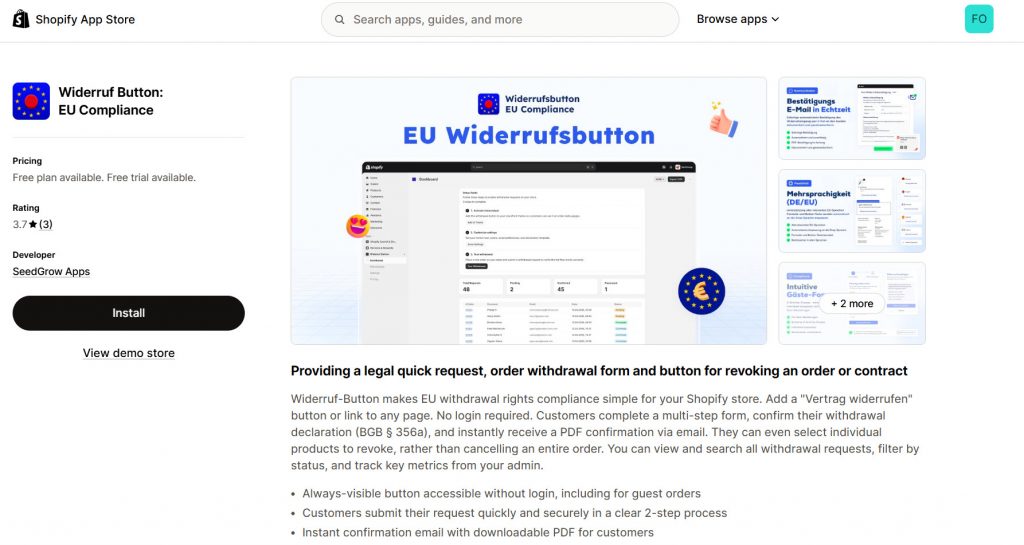
The flow works without a customer login, including guest orders. They confirm the order, submit the withdrawal, and get an email plus a PDF at once. You see the request in admin with a timestamp. Pro plans add partial revocation, so they can pull one item off a mixed cart instead of killing the whole order.
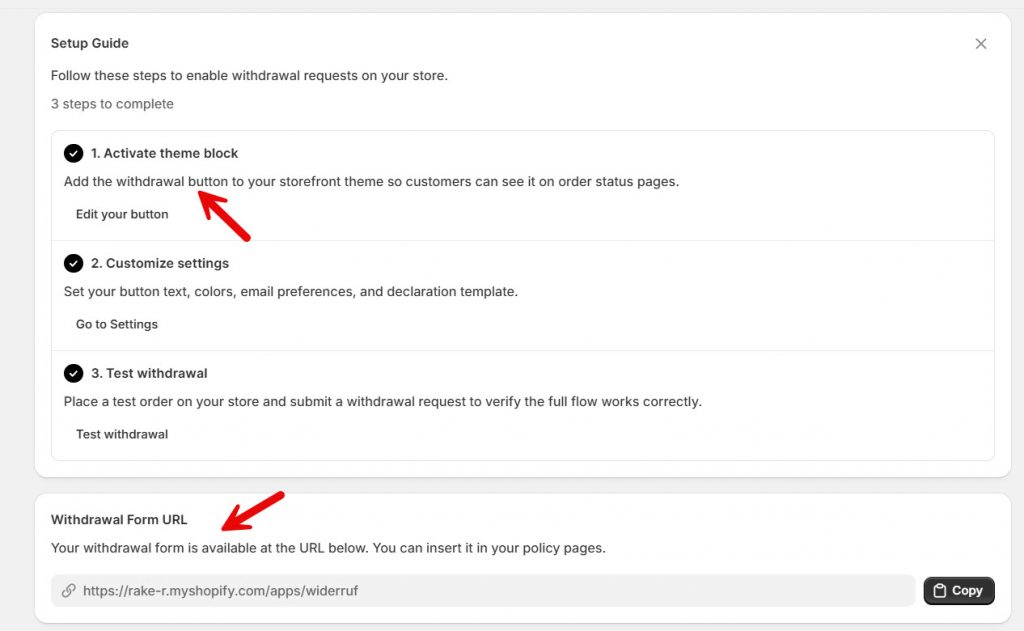
You can place the button with a theme app block in the footer, on the Widerrufsbelehrung page, on the contact or FAQ page, or as a text link to /apps/widerruf.
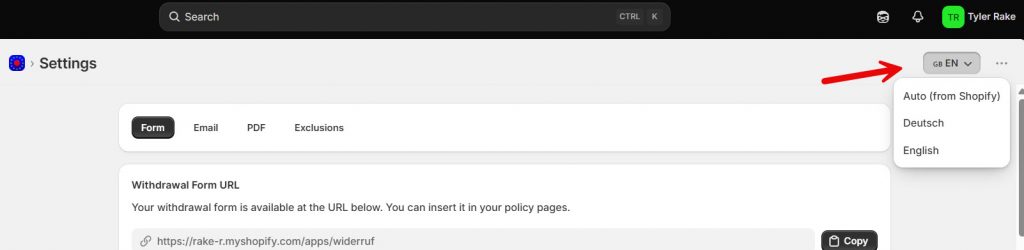
English and German are supported.
A free plan covers the button, form, order checks, a fixed 14-day window, confirmation emails, and 90 days of logs. That is enough for many shops that only need the path live. The app does not write your Widerrufsbelehrung for you. It also does not decide B2B versus B2C.
What it does is keep the electronic withdrawal function on the same shop used to make the purchase, which is the requirement § 356a BGB expects from 19 June 2026. In peak season, that matters more than a perfect policy page nobody can find.
If you want to stay compliant with German return policy rules when tickets pile up, the button provides the customer with a path and your team with a list.
Common Mistakes To Avoid During Peak Season
Peak season does not invent new German return rules. It just makes the usual mistakes expensive. Support is slower, warehouses are full, and a sloppy notice or a late refund is harder to hide. These are the misses that show up most when you try to stay compliant with German return policy rules under load.
- Starting the Clock On The Order Date: The 14-day withdrawal window for goods usually starts the day after delivery. Treating “purchase plus 14” as the cutoff will reject valid January returns on December orders.
- Assuming the Parcel Must Arrive in 14 Days: The customer only has to declare the withdrawal on time. The box can land later. Blocking a request because the warehouse has not scanned it yet is the wrong test.
- Letting The Legal Notice Disappear Behind Campaign Blocks: A Black Friday banner, upsell drawer, or new checkout app can push the Widerrufsbelehrung and model form off the path. If the customer did not see the notice before paying, the short window may not start.
- Using Shop Policy Copy Instead Of The Statute: “No returns after 20 December” or “store credit only” does not override consumer withdrawal rights. A longer shop policy is fine. A shorter one is not.
- Holding Refunds Until January “When Things Calm Down”: You have 14 days from the withdrawal notice to repay, unless you are waiting on the goods or proof of shipment. Peak volume is not a legal pause.
- Mixing B2B and B2C Rules On The Same Ticket: Business buyers generally have no statutory right of withdrawal. Consumers do. Staff who apply one script to every order will either over-refund or refuse people who are protected.
Frequently Asked Questions
Now, let’s take a look at some frequently asked questions and answers on this topic.
Does Peak Season Change The 14-Day Withdrawal Right?
No. German consumer withdrawal rules do not pause for Black Friday or Christmas. The customer still has 14 days to declare the withdrawal. You still have 14 days to refund after that notice, unless you are waiting on the goods or proof of shipment. Volume is an operations problem, not a legal extension.
When Does The 14-Day Clock Start On A Goods Order?
For most goods, it starts the day after delivery, not the day Shopify created the order. Split shipments often start only after the last item arrives. A late December delivery can still be withdrawn in January. Using “order date plus 14” is how shops reject valid requests.
Does The Return Parcel Have To Reach Me Inside 14 Days?
No. The customer has to declare the withdrawal on time. They then have 14 days to send the goods. Blocking a file because the warehouse has not scanned the box yet is the wrong test.
Can My Shop Policy Overrule German Return Rules In December?
A shop policy can be longer or kinder than the law. It cannot be shorter for consumers. “No returns after 20 December” or “store credit only” does not cancel the statutory right. If you want to stay compliant with German return policy rules, treat shop copy as extra, not as a replacement.
What Notices Must Stay Live At Checkout?
The Widerrufsbelehrung, the model withdrawal form, and a clear line on who pays return shipping. The customer needs those before they pay. A footer policy nobody opens, or a banner that covers the text, is not the same as giving the notice.
What Is The Electronic Withdrawal Button Rule?
From 19 June 2026, § 356a BGB requires an electronic withdrawal function on the same online interface used to conclude in-scope B2C distance contracts. Label it “Vertrag widerrufen” or wording that is just as clear. Keep it available during the withdrawal period and send a confirmation on a durable medium as soon as they submit.
Does An Email Address Alone Meet The Button Duty?
After 19 June 2026, “write to returns@…” is not the function the statute describes for in-scope online contracts. The customer needs a path in the shop or app, followed by immediate confirmation. Email support can sit next to that path. It should not replace it.
Do B2B Orders Need The Same Withdrawal Button?
Business buyers generally have no statutory withdrawal right, so the button duty does not follow the same way. Mixed stores still need a B2C path. Train staff to check customer type before they refuse a ticket or fire the same holiday macro at everyone.
Does The Widerruf Button Replace The Widerrufsbelehrung?
No. The app adds a storefront withdrawal button or link on Shopify, runs a short form, and sends an email and a PDF confirmation. It logs the request in admin. You still need the legal notice and model form at checkout. The app handles the electronic path. It does not write your policy text.
How Do I Stay Shopify-Compliant When Ticket Volume Spikes?
Keep the notices in the checkout path after every campaign theme. Log delivery date and withdrawal-notice date on the order. Refund inside the 14-day window. Use one consumer script and one B2B script. Put the withdrawal function on the storefront before the next peak, not in the middle of it.
Conclusion
German return rules do not get lighter in November. Consumers still get 14 days to withdraw. You still owe a clear notice before checkout and a refund on a short clock. Peak season only removes the slack that was covering sloppy dates, buried text, and a shared inbox.
If you sell to German consumers on Shopify, stay compliant with German return policy rules by keeping three things live: the Widerrufsbelehrung, a logged withdrawal date, and a storefront path the customer can use without having to hunt for an email address.
From 19 June 2026, that path is an electronic withdrawal function rather than a holiday FAQ. Widerruf Button puts that function on the shop, sends the confirmation, and gives your team a list instead of a December thread. Pair it with the notices you already owe.
The law will not wait until January.
We hope you have enjoyed the article and learned something new. If you are looking for more Shopify tutorials like this, feel free to check out our blog. You should also check out our Shopify page to learn more about our apps.
How else would you deal with the peak season rush?
Let us know in the comments.
